
November 24, 2025
The Menopause Innovation Gap: Why Smart Investors Are Funding Solutions for 65 Million Women
The menopause market could explode from $5 billion to $40 billion by 2030—here's why accredited investors are paying attention
Key Takeaways
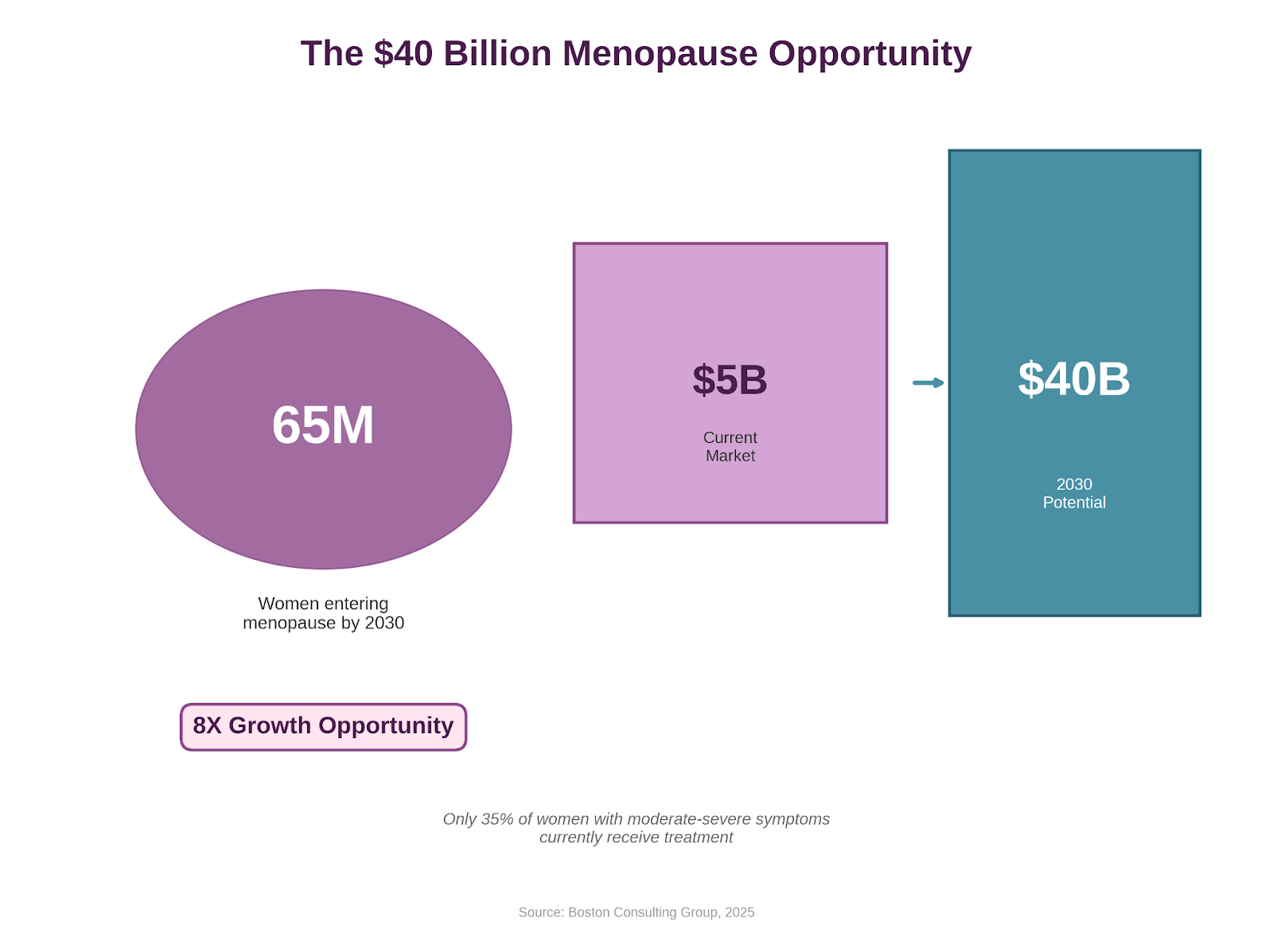
By 2030, 65 million American women will be experiencing menopause, yet the current market for menopause care is only $5 billion—roughly the same size as the fertility market, which serves a much smaller population. If treatment rates increase, the menopause market could grow eightfold to $40 billion, creating a massive investment opportunity for those who recognize the gap early.
If you are a woman in your late forties or fifties, this story may feel very familiar. You are lying awake at three in the morning, drenched in sweat after another night of broken sleep. Your mood feels unpredictable. Brain fog makes you lose your words mid sentence in meetings that matter.
You are not alone.
By 2030, an estimated sixty five million women in the United States will be in one of the three stages of menopause. Yet the menopause market in the United States is still valued at under five billion dollars, roughly the same size as the fertility services market which serves a far smaller population. Globally, analysts project a menopause market opportunity of around forty billion dollars across therapies, devices, digital health, and workplace solutions.
For women’s health investors, menopause is both a silent health crisis and a major market opportunity that remains early.
Why Is Menopause Care Still So Underfunded?
Menopause is a universal life stage for women who live long enough, but it has rarely been treated as a core healthcare priority.
Medical research has historically left women out. Females have been excluded from roughly two thirds of clinical studies, which means the evidence base for midlife and later life women’s health has lagged behind other areas of medicine. At the same time, women’s health receives only a small fraction of health related venture capital, even though women make the majority of healthcare decisions and represent a large share of healthcare spending.
Signals are starting to shift. Recent employer surveys show that around four percent of companies offered menopause related benefits in 2023. By 2025, that number is expected to rise to eighteen percent. That is progress, but it still leaves most women navigating menopause with little structured support from their healthcare providers or employers.
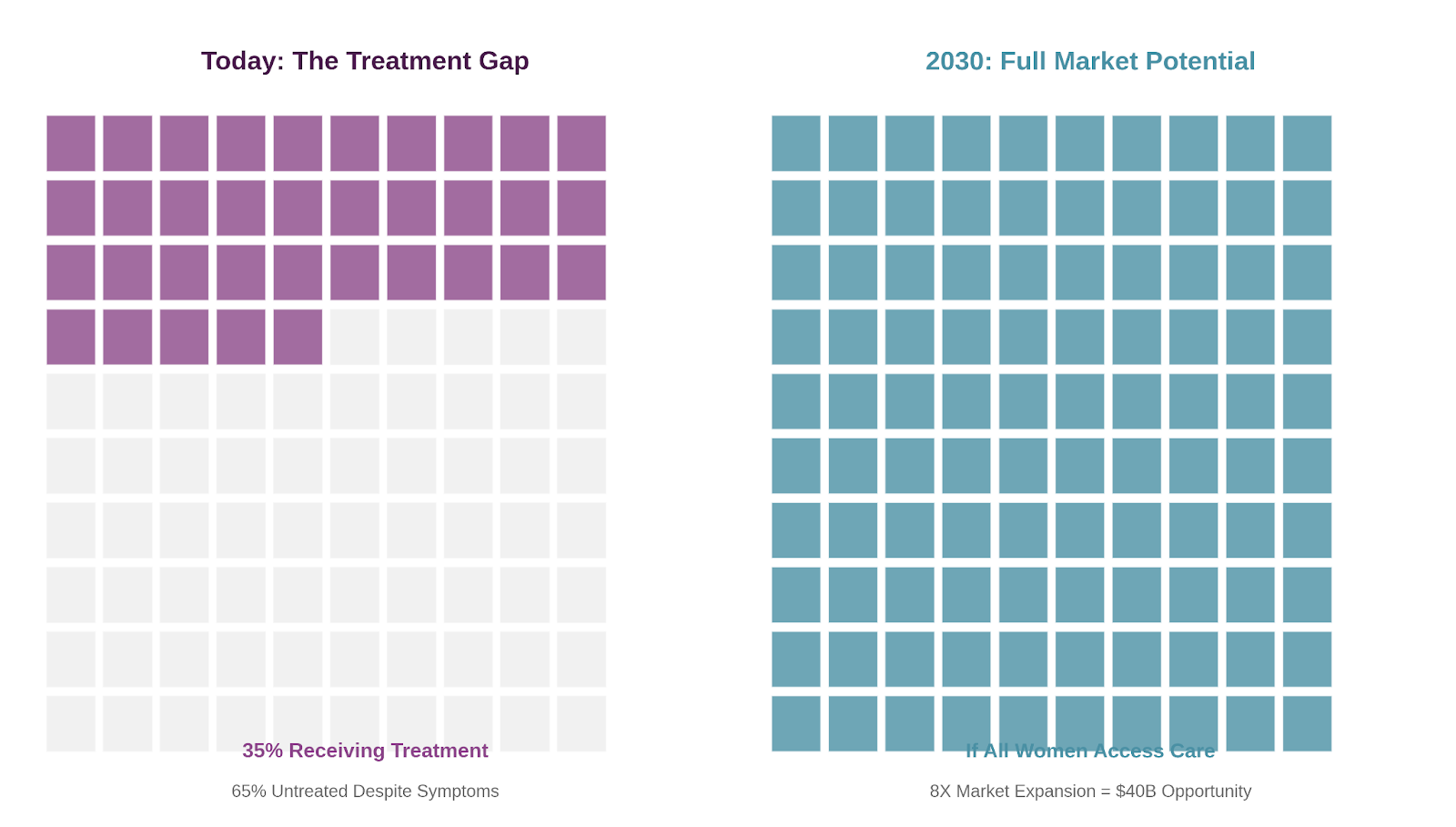
The result is a large menopause market opportunity sitting on top of an equally large treatment gap.
How Big Is the Menopause Market Opportunity?
Today’s menopause market, at just under five billion dollars, barely reflects the scale of demand. By 2030, sixty five million women in the United States alone will be in peri menopause, menopause, or post menopause. Many will live in this life stage for decades.
When you combine this demographic wave with growing awareness, employer interest, and new clinical research, the potential expands significantly. Market analyses estimate a global menopause market opportunity approaching forty billion dollars when you include:
• Evidence based therapies and devices for symptom relief
• Digital health platforms that support multi symptom care over time
• Workplace solutions and benefits that help women stay and thrive in their careers
• Analytics, diagnostics, and longitudinal data tools that support better care models
For investors, the key is that menopause is not a short term event. Hot flashes can last seven to ten years on average. Sleep disturbance, vaginal symptoms, metabolic changes, and bone health risks often continue long after the final period. That creates long duration, recurring revenue relationships when solutions genuinely help.
What Women Are Actually Experiencing
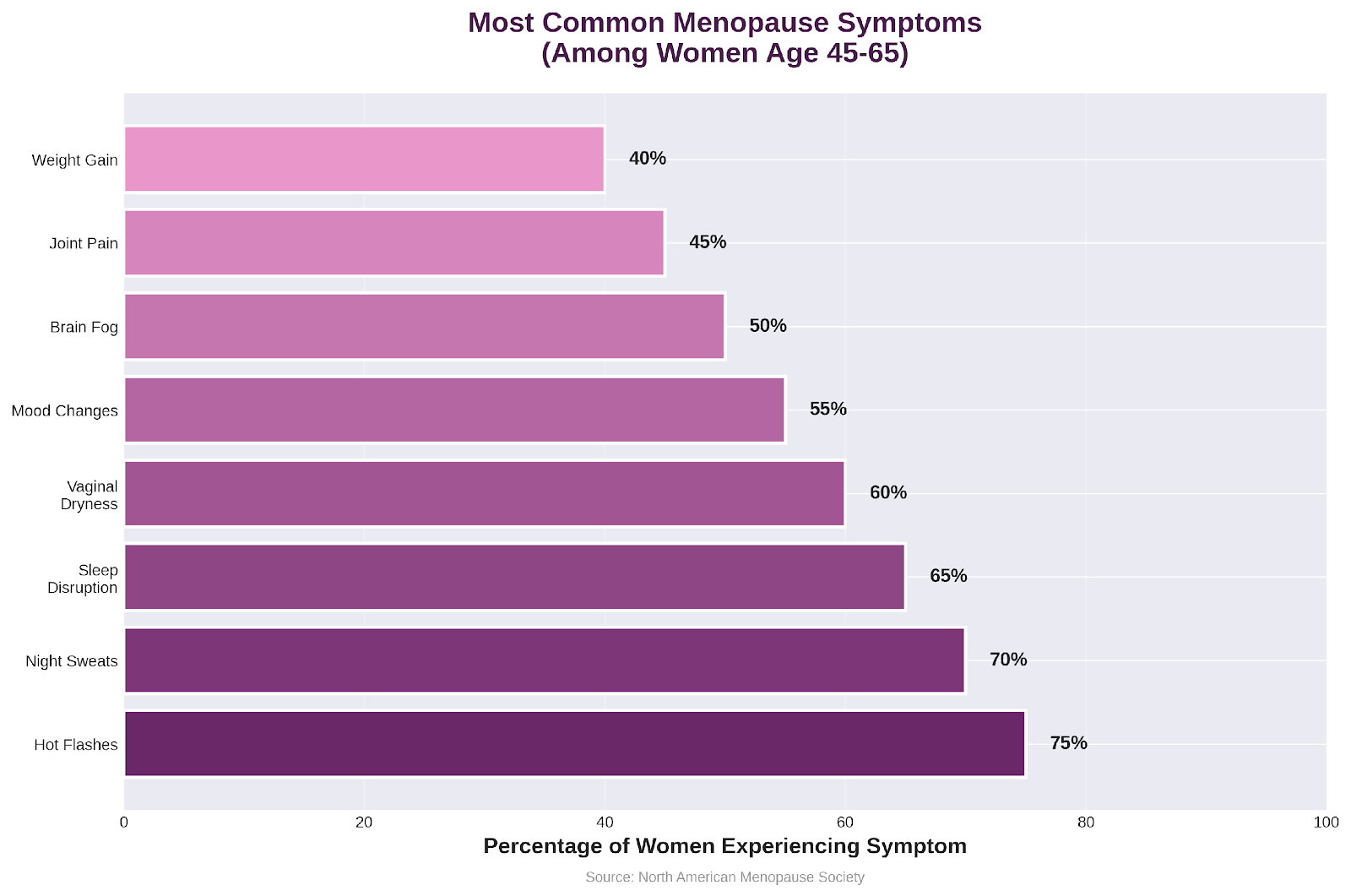
The most common symptoms include:
- Hot flashes and night sweats (75% of women)
- Sleep disruption (65%)
- Vaginal dryness (60%)
- Mood changes (55%)
- Brain fog (50%)
- Joint pain (45%)
- Weight changes (40%)
The Innovation Breakthrough: Companies Solving Real Problems
The good news is that a new generation of menopause innovators is starting to build solutions that reflect the reality of women’s lives. Portfolia’s women’s health funds have backed several of these companies and closely follow their peers.
Madorra: Reimagining Vaginal Health without Hormones
Led by chief executive Holly Rockweiler, Madorra is developing the first effective, non hormonal, home use medical device designed to treat vaginal dryness and related genitourinary symptoms.
Why it matters: around sixty percent of menopausal women experience vaginal dryness, yet many are not comfortable using estrogen based products or cannot use them for medical reasons. Madorra’s non hormonal approach aims to expand treatment access to millions of women who have had few options.
Gameto: Cell Therapies for Ovarian Health and Menopause Biology
Under the leadership of chief executive Dr Dina Radenkovic, Gameto is building cell based therapeutics that address the underlying biology of ovarian aging. Their platform work began in fertility, shortening and simplifying in vitro fertilization protocols, and extends into menopause related conditions.
Why it matters: by working on the ovarian cells that drive hormonal change, Gameto’s research has the potential to change how we think about the timing and biology of menopause, not just its symptoms. That represents a paradigm shift for women’s health and menopause investing.
Maven Clinic: Comprehensive Virtual Care across the Menopause Journey
Katherine Ryder founded Maven Clinic and grew it into the largest virtual clinic for women and families. Maven’s care model spans fertility, maternity, pediatrics, and menopause.
Why it matters: Maven’s menopause program connects women to menopause informed clinicians, mental health providers, and nutrition experts in a virtual environment. That makes it easier to address clusters of symptoms together, rather than treating each issue in isolation.
Apollo Neuroscience: Stress and Sleep Support through Wearable Neuroscience
Kathryn Fantauzzi leads Apollo Neuroscience, which offers a wearable device that uses gentle vibration patterns to support stress management, sleep, and focus.
Why it matters: stress can intensify many menopause symptoms, from hot flashes to sleep disruption. Tools that help women regulate stress and improve sleep provide a non pharmaceutical layer of support during the transition.
Together, companies like these illustrate how menopause innovation is moving beyond one size fits all hormone therapy into targeted devices, digital care platforms, and stress and sleep technologies that reflect how women actually live.
The $40 Billion Question: Why Now?
Several trends are converging to make menopause a timely focus for women’s health investors.
- Demographics: Baby Boomers and Generation X represent the largest and wealthiest cohort of menopausal women in history. Many are still in the workforce and have meaningful spending power.
- Workplace evolution: Employers are beginning to view menopause as a talent and retention issue, not just a personal matter. Menopause benefits, flexible supports, and digital care programs are starting to appear in corporate benefits offerings.
- Culture shift: High profile women in media, business, and politics are speaking openly about menopause. This is reducing stigma and encouraging more women to ask for care rather than staying silent.
- Technology enablement: Telehealth, remote monitoring, and wearable devices make it easier to deliver specialized menopause care at scale, without relying only on local brick and mortar clinics.
- Research awakening: Scientific understanding of menopause biology, cardiovascular risk, brain health, and bone health in midlife women is advancing quickly, supported by new public and private funding initiatives.
In other words, the market, the science, and the culture are finally moving in the same direction.
What Makes Menopause a Compelling Investment Opportunity?
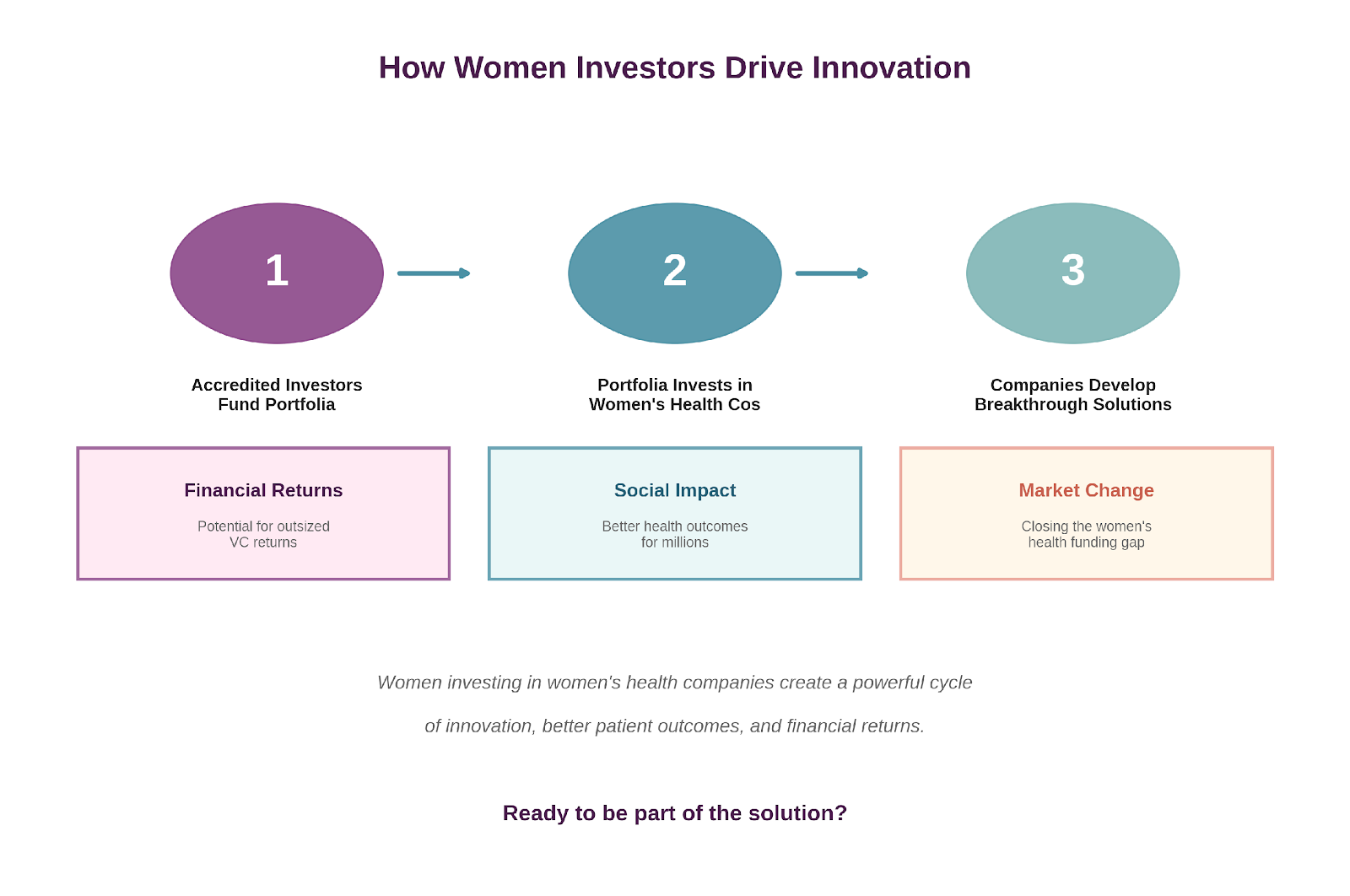
From Portfolia’s vantage point as one of the most active investors in women’s health, menopause checks many of the boxes investors look for.
- Large and growing addressable market
Sixty five million women in the United States will be in a menopause related life stage by 2030, yet only around thirty five percent currently receive any treatment. - Recurring, long term relationships
Many symptoms last seven to ten years or more, which supports subscription and long term care models when solutions are effective. - Limited competition from legacy players
Historically, most investment has clustered in fertility and maternal health, not menopause. Early leaders in menopause care can build strong brands and defensible positions. - Attractive unit economics
Many women reach menopause at or near their peak earning years and are willing to invest in their health, comfort, and ability to stay active at work and at home. - Multiple exit pathways
Successful menopause companies can attract interest from pharmaceutical acquirers, strategic digital health and benefits platforms, or eventually public markets as the category matures.
For many investors, menopause investing offers a blend of financial upside and visible impact on women’s quality of life.
How Portfolia Is Investing in the Menopause Market Opportunity
Portfolia’s women’s health funds were created for exactly this type of under served, high impact market.
Our investors are women and allies who see menopause not as a side topic but as a core part of women’s health. Through Portfolia’s community based model, nearly two thousand members review pitch sessions, share lived experience, and help direct capital to founders who are building the solutions they wish had existed for themselves, their colleagues, and their families.
Within our broader women’s health portfolio, we:
• Back companies that address the biology of ovarian aging and menopause at its source
• Support digital care and benefits platforms that make menopause support accessible at scale
• Invest in tools for sleep, stress, cardiovascular health, and bone health that are particularly relevant in midlife
• Look for data and analytics platforms that can help health systems and employers understand and respond to menopause related needs
Menopause sits alongside fertility, maternal health, cardiovascular disease, brain health, autoimmune conditions, and oncology as one of the pillars of Portfolia’s women’s health investing thesis.
Ready to Be Part of the Menopause Solution?
The menopause innovation gap is a clear market inefficiency. By 2030, tens of millions of women in the United States and hundreds of millions worldwide will need better menopause care. The current market, at around five billion dollars, is only the first step toward an addressable opportunity that is many times larger.
For professional women who have experienced menopause symptoms themselves, and for the people who care about them, this is more than a line on a market map. It is a chance to fund solutions you wish had existed, support better options for future generations, and participate in a meaningful shift in how healthcare treats midlife women.
Portfolia offers accredited investors access to diversified venture portfolios in high growth women’s health companies, including innovators addressing the menopause market opportunity. To learn more about Portfolia’s funds and how to participate, contact us.
NEXT STEPS: If you're an accredited investor interested in women's health venture capital, explore Portfolia's funds at https://portfolia.co/funds